
Developer Offshore research
How should an offshore developer prove a browser defect is a release risk?
· Research report
A research method for separating browser-specific behavior from fixture, viewport, assistive-technology, and environment noise.
Use this report with the Research library and the related daily developer guides to turn evidence into a bounded work brief.
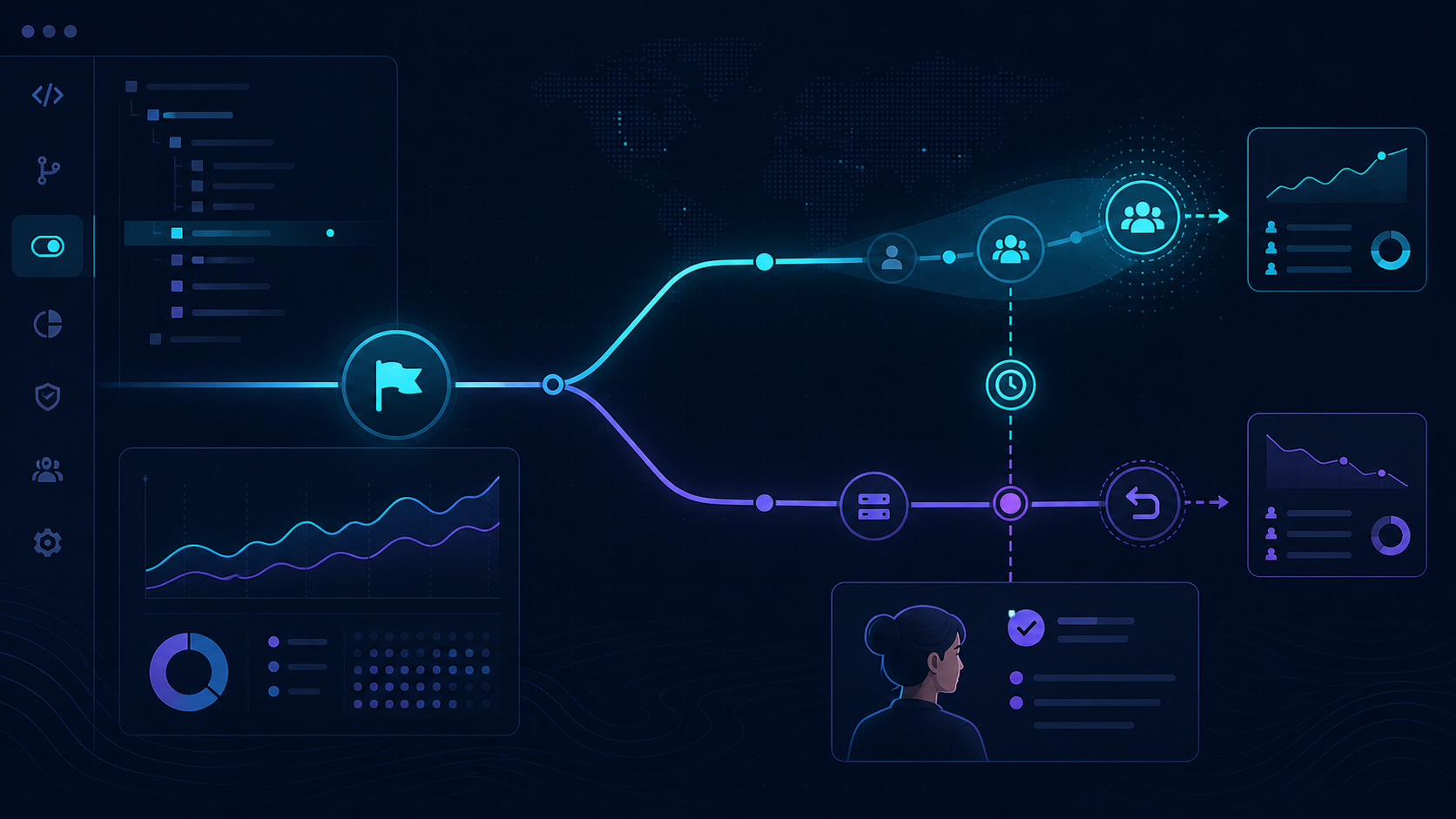
Key Stats
- One supported user flow compared across affected and control browsers
- Viewport, locale, input method, and fixture recorded
- Web Platform Tests, MDN, and WCAG used as evidence lenses
Key Takeaways
- Tie severity to the supported user path.
- Control the environment before concluding.
- Treat automation as partial evidence.
Research question and evidence scope
When a web defect appears in one browser during distributed development, what evidence is enough to call it a release risk rather than a local setup anomaly? The study follows one user-facing path, one browser behavior, and the supported browser policy for the product. It does not rank browsers generally or treat a screenshot as proof of a universal defect. The unit of evidence is a reproducible interaction with a declared viewport, runtime, input method, fixture, expected behavior, and observed behavior.
A Philippines-based developer may discover the issue outside the reviewer’s working hours. The handoff must therefore preserve more than a visual symptom: it should show the route, browser and version, viewport, locale, network condition, steps, console or accessibility output where relevant, and the smallest reliable reproduction. The contributor can isolate the behavior and propose a fix. The product owner decides supported coverage and release impact.
Methodology and public evidence
Choose a representative flow such as keyboard navigation, form submission, responsive layout, file selection, or client-side rendering. Run it in the affected browser and one comparison browser using the same fixture, viewport, account state, and network profile. Repeat after a clean build and a fresh session. Classify the result as browser-specific, viewport-specific, timing-dependent, assistive-technology-dependent, data-dependent, or not reproduced. Preserve a short recording or screenshot only when it contains no sensitive data.
Use the Web Platform Tests project, MDN browser-compatibility data, and WCAG 2.2 as evidence lenses. Standards and compatibility tables help distinguish an unsupported feature from an implementation defect; they cannot prove the private application’s user impact. Record browser engine, version, operating system, device emulation, assistive technology, and excluded combinations. A citation should explain the behavior under test, not decorate an otherwise unsupported claim.
Analysis of release significance
A defect becomes more significant when it blocks a supported task, affects a meaningful user group, corrupts data, creates an inaccessible state, or cannot be worked around safely. A one-pixel difference in an unsupported viewport may not carry the same release consequence as a submit control that cannot be reached by keyboard in a supported browser. Severity should connect observed behavior to product support and user consequence, not to the contributor’s effort to reproduce it.
Compare a real failing path with a control path. If a date field fails only under a locale that the product claims to support, the locale is part of the release boundary. If a CSS feature fails only in an obsolete browser outside support, the evidence may justify documentation rather than a code change. If automation passes while a screen reader path fails, the test suite is incomplete evidence, not evidence that the user path is safe.
Counterevidence and role boundary
Browser automation may use a different font, device scale, network, or accessibility tree than a real user. A screenshot can hide focus order, announcement behavior, or data corruption. A defect that disappears after a clean build may be cache-dependent, while a defect that appears only under throttling may still matter for slow users. State which observations were repeated and which remain hypotheses.
The developer may add a focused test, improve semantics, create a fallback, or document an unsupported case. The product and accessibility owners decide support policy, severity, release gating, and public communication. Do not silently drop a browser from the matrix or claim accessibility conformance from a single automated result.
Limitations and decision boundary
A small browser matrix cannot cover every device, extension, zoom setting, operating system, or assistive technology. Public compatibility data changes and may describe a feature rather than a private interaction. State the matrix, repetitions, fixture, build, and untested user paths. Keep not-reproduced separate from fixed and from unsupported.
The evidence supports a bounded action: fix the interaction, add a regression case, expand the supported matrix, publish a limitation, or hold the release. It does not support calling a release safe because one browser passed or calling the whole product broken because one environment failed. The owner should be able to see why the chosen action matches the supported user promise.
Evidence-led conclusion
A browser defect is a release risk when a repeatable failure intersects a supported user path and a stated product consequence, with environment variables controlled well enough to challenge the result. This evidence is useful for a browser-compatibility decision, not as a universal score for a developer, supplier, or software team. The accountable owner should record the observation, the missing evidence, the permitted next step, and the condition that would stop it. A distributed developer can make the work legible and repeatable; the owner retains authority over product, security, data, and release risk.
The strongest distributed handoff names the exact user action, not merely the browser. It preserves a comparison run, expected and observed states, the support policy, and unresolved combinations. This gives the release owner a defensible choice without turning a local screenshot into a universal claim.
The report should distinguish a browser engine limitation from an application regression and both from an accessibility barrier. That distinction changes the remedy: a polyfill, a semantic correction, a support-policy decision, or a release hold. Keep the comparison artifact small enough to rerun, but include the conditions that matter, including zoom, keyboard, locale, reduced motion, and assistive technology when those are part of the supported experience. A reviewer working later should be able to reproduce the issue from the written record and understand why the observed consequence matters. If the evidence is incomplete, label the result as a hypothesis and propose the narrowest safe next test.
Evidence table
| Signal | What to inspect | Owner |
|---|---|---|
| Outcome | Acceptance evidence for the bounded task | Task reviewer |
| Control | Access, test, and approval boundary | Internal owner |
| Handoff | Open risks and next decision | Next owner |
Good distributed work is observable at the handoff: the result, evidence, limitations, and next owner are all explicit.
Frequently asked questions
Does this report prove a rule for every offshore developer?
No. It studies one bounded software-development decision and states which evidence remains outside scope.