
Developer Offshore guide
How to build a mobile release device matrix with an offshore developer
A focused testing assignment for platform differences, permissions, interrupted updates, and evidence.
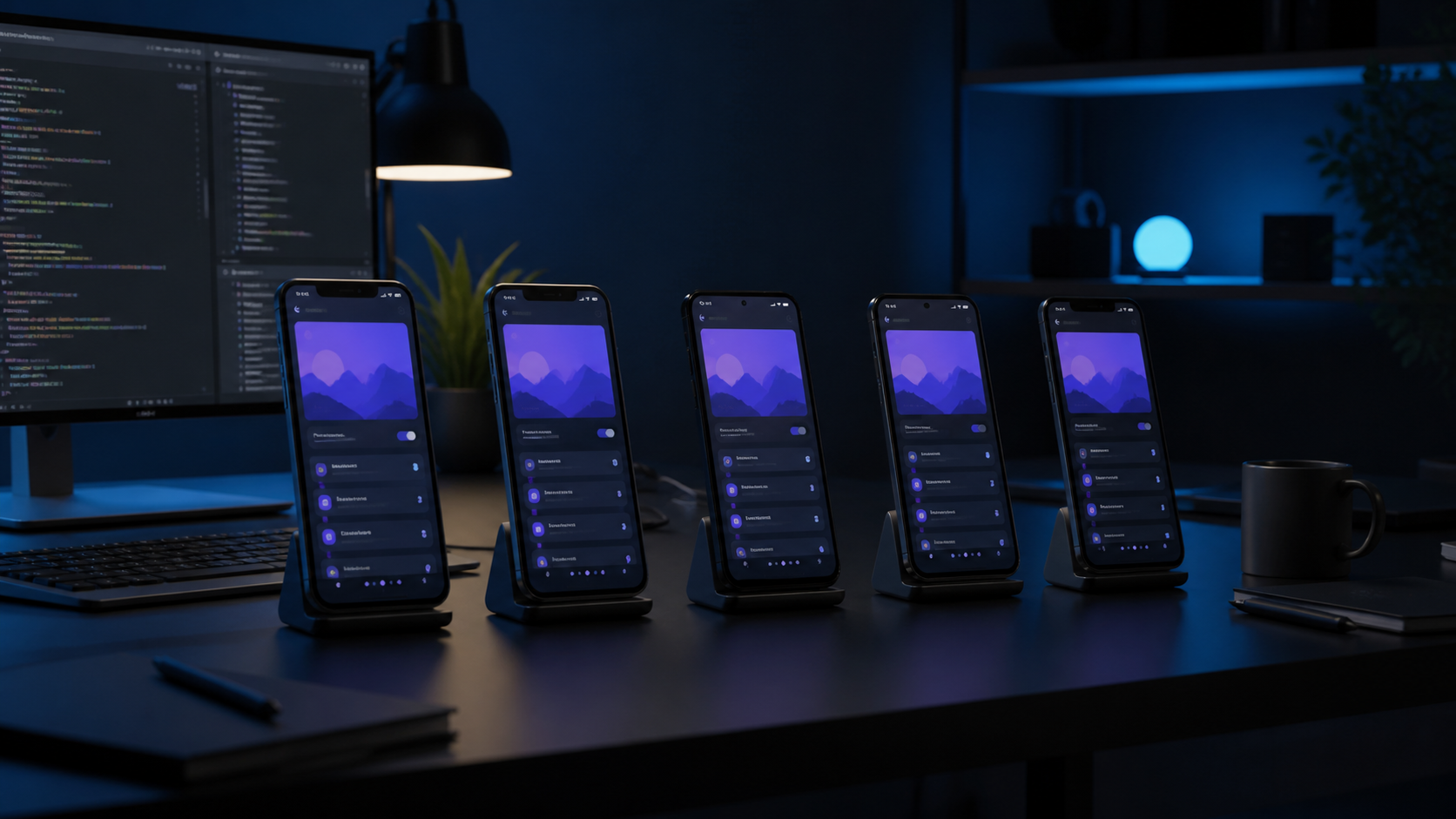
Published August 23, 2026
How to build a mobile release device matrix with an offshore developer
- which devices and states are sufficient to support the next mobile release decision
- Use representative evidence and name its limits.
- Keep approval with the accountable owner.
A route-specific operating brief
For how to build a mobile release device matrix with an offshore developer, begin with a route-specific decision: which devices and states are sufficient to support the next mobile release decision. This article is guidance for mobile teams that need coverage without pretending every device was tested, not a promise that one workflow fits every software team. A distributed contributor needs a bounded question, a known starting state, an approved working surface, and a named reviewer. Describe what a person, service, or operator can observe today, what should be different, and what evidence would change the decision. Map the technical path before selecting an implementation. For this subject, inspect the app build, supported OS list, device lab, release notes, and crash evidence. Identify inputs, outputs, state transitions, external dependencies, generated artifacts, caches or queues, permissions, and the people who own consequences at each boundary. A search result, green check, or successful request proves only what it exercised. Mark assumptions separately from observations. If a dependency, account, device, environment, or owner is unavailable, record that limitation and choose a safe independent slice. Use representative evidence rather than a convenient happy path. Start with a normal case, then include the empty or missing case, an invalid or denied case, a repeated or delayed case when relevant, and a boundary case that crosses ownership, privacy, accessibility, data, or release risk. Record fixture identity, setup, revision, environment, command or interaction, expected result, observed result, and skipped checks. Synthetic values preserve the problem shape without moving protected records into a general handoff. The offshore developer can inspect the approved repository, trace relevant behavior, prepare a focused change, add a regression fixture, run bounded checks, and explain uncertainty. The buyer-side product or technical owner retains authority over product meaning, architecture exceptions, protected data, customer impact, credentials, public communication, and release approval. Do not make role boundaries implicit. Escalate security, privacy, data-loss, irreversible-action, or unapproved-production concerns. Work through the decision in small, reversible steps. Preserve a known-good comparison, change one relevant behavior at a time, and make the acceptance case visible. Test uncomfortable paths such as timeout, restart, stale state, duplicate input, partial completion, missing configuration, unavailable service, long content, or an interrupted handoff where the topic requires it. Distinguish an implementation result from a recommendation and both from approval. A passing local check is not evidence for systems, consumers, devices, records, or permissions never inspected. Write the cross-time-zone handoff as part of the technical work. Include starting and ending revisions, changed paths, fixture names, checks passed and skipped, expected and observed outcomes, evidence location, environment limits, open questions, reviewer, approval owner, and next authorized action. Use a consistent technical time reference. The next working window should know whether it may continue, review, request a decision, wait for access, or stop. Avoid “looks good” summaries that hide the state behind a conclusion. Keep these focus questions visible: 1) tie device selection to user risk and changed code paths. 2) include permissions, deep links, offline transitions, and upgrade states. 3) record physical and simulated coverage separately. 4) use the same fixture and workflow across selected devices. 5) treat platform divergence as a product question when behavior is unclear. 6) capture screenshots, logs, build identity, and reset conditions. 7) keep store submission and release approval outside the contributor role. 8) test an interrupted update instead of only a clean install. 9) state uncovered device classes and the reason for the gap. 10) turn new failures into matrix updates rather than one-off notes. Each should lead to a concrete observation, not a generic checklist item. Ask which behavior is at risk, what evidence distinguishes alternatives, which owner decides the consequence, and what condition reopens the work. If the answer is unknown, preserve the unknown. A disciplined limitation is more valuable than an invented result or unsupported guarantee. After the first result, review signals that could falsify the conclusion: reopened changes, repeated clarification, false alarms, stale instructions, hidden consumers, missed states, unexpected side effects, support confusion, access drift, or a dependency that changed after the check. Choose one small follow-up with an owner and a reopening trigger. Keep public guidance factual and bounded. Do not invent credentials, locations, results, testimonials, prices, rates, or customer claims. Close with a portable record of the selected option, rejected alternatives, known limits, approval owner, and revisit trigger. The purpose of this route-specific article is not to make the contributor responsible for every organizational decision. It shows how a Philippines-based offshore developer can advance code, tests, measurements, and documentation across working hours when the assignment is clear. The internal team keeps the decision boundary; the contributor makes progress inside it.
Tie device selection to user risk and changed code paths.
Tie device selection to user risk and changed code paths. Start with which devices and states are sufficient to support the next mobile release decision. mobile teams that need coverage without pretending every device was tested should name the affected journey, current behavior, intended outcome, and the person accountable for the consequence. The offshore developer needs a bounded question and an approved working surface, not a vague request to “make it better.” Use the app build, supported OS list, device lab, release notes, and crash evidence to establish what can be inspected and what remains outside the assignment.
For which devices and states are sufficient to support the next mobile release decision, this matters because tie device selection to user risk and changed code paths. In a Philippines-based offshore developer lane, the contributor can inspect the approved repository, create synthetic fixtures, implement the bounded technical change, and package evidence for review. The buyer-side owner retains product meaning, protected data decisions, architecture exceptions, customer impact, and release acceptance. Record the starting revision, changed paths, environment, command or interaction, expected result, observed result, skipped checks, and next authorized action. Distinguish observation, inference, recommendation, and approval. If evidence is missing, state the limitation and choose a safe independent slice instead of filling the gap with confidence. Revisit the note when the interface, dependency, workflow, ownership, or risk boundary changes.
Include permissions, deep links, offline transitions, and upgrade states.
Include permissions, deep links, offline transitions, and upgrade states. Start with which devices and states are sufficient to support the next mobile release decision. mobile teams that need coverage without pretending every device was tested should name the affected journey, current behavior, intended outcome, and the person accountable for the consequence. The offshore developer needs a bounded question and an approved working surface, not a vague request to “make it better.” Use the app build, supported OS list, device lab, release notes, and crash evidence to establish what can be inspected and what remains outside the assignment.
For which devices and states are sufficient to support the next mobile release decision, this matters because include permissions, deep links, offline transitions, and upgrade states. In a Philippines-based offshore developer lane, the contributor can inspect the approved repository, create synthetic fixtures, implement the bounded technical change, and package evidence for review. The buyer-side owner retains product meaning, protected data decisions, architecture exceptions, customer impact, and release acceptance. Record the starting revision, changed paths, environment, command or interaction, expected result, observed result, skipped checks, and next authorized action. Distinguish observation, inference, recommendation, and approval. If evidence is missing, state the limitation and choose a safe independent slice instead of filling the gap with confidence. Revisit the note when the interface, dependency, workflow, ownership, or risk boundary changes.
Record physical and simulated coverage separately.
Record physical and simulated coverage separately. Start with which devices and states are sufficient to support the next mobile release decision. mobile teams that need coverage without pretending every device was tested should name the affected journey, current behavior, intended outcome, and the person accountable for the consequence. The offshore developer needs a bounded question and an approved working surface, not a vague request to “make it better.” Use the app build, supported OS list, device lab, release notes, and crash evidence to establish what can be inspected and what remains outside the assignment.
For which devices and states are sufficient to support the next mobile release decision, this matters because record physical and simulated coverage separately. In a Philippines-based offshore developer lane, the contributor can inspect the approved repository, create synthetic fixtures, implement the bounded technical change, and package evidence for review. The buyer-side owner retains product meaning, protected data decisions, architecture exceptions, customer impact, and release acceptance. Record the starting revision, changed paths, environment, command or interaction, expected result, observed result, skipped checks, and next authorized action. Distinguish observation, inference, recommendation, and approval. If evidence is missing, state the limitation and choose a safe independent slice instead of filling the gap with confidence. Revisit the note when the interface, dependency, workflow, ownership, or risk boundary changes.
Use the same fixture and workflow across selected devices.
Use the same fixture and workflow across selected devices. Start with which devices and states are sufficient to support the next mobile release decision. mobile teams that need coverage without pretending every device was tested should name the affected journey, current behavior, intended outcome, and the person accountable for the consequence. The offshore developer needs a bounded question and an approved working surface, not a vague request to “make it better.” Use the app build, supported OS list, device lab, release notes, and crash evidence to establish what can be inspected and what remains outside the assignment.
For which devices and states are sufficient to support the next mobile release decision, this matters because use the same fixture and workflow across selected devices. In a Philippines-based offshore developer lane, the contributor can inspect the approved repository, create synthetic fixtures, implement the bounded technical change, and package evidence for review. The buyer-side owner retains product meaning, protected data decisions, architecture exceptions, customer impact, and release acceptance. Record the starting revision, changed paths, environment, command or interaction, expected result, observed result, skipped checks, and next authorized action. Distinguish observation, inference, recommendation, and approval. If evidence is missing, state the limitation and choose a safe independent slice instead of filling the gap with confidence. Revisit the note when the interface, dependency, workflow, ownership, or risk boundary changes.
Treat platform divergence as a product question when behavior is unclear.
Treat platform divergence as a product question when behavior is unclear. Start with which devices and states are sufficient to support the next mobile release decision. mobile teams that need coverage without pretending every device was tested should name the affected journey, current behavior, intended outcome, and the person accountable for the consequence. The offshore developer needs a bounded question and an approved working surface, not a vague request to “make it better.” Use the app build, supported OS list, device lab, release notes, and crash evidence to establish what can be inspected and what remains outside the assignment.
For which devices and states are sufficient to support the next mobile release decision, this matters because treat platform divergence as a product question when behavior is unclear. In a Philippines-based offshore developer lane, the contributor can inspect the approved repository, create synthetic fixtures, implement the bounded technical change, and package evidence for review. The buyer-side owner retains product meaning, protected data decisions, architecture exceptions, customer impact, and release acceptance. Record the starting revision, changed paths, environment, command or interaction, expected result, observed result, skipped checks, and next authorized action. Distinguish observation, inference, recommendation, and approval. If evidence is missing, state the limitation and choose a safe independent slice instead of filling the gap with confidence. Revisit the note when the interface, dependency, workflow, ownership, or risk boundary changes.
Capture screenshots, logs, build identity, and reset conditions.
Capture screenshots, logs, build identity, and reset conditions. Start with which devices and states are sufficient to support the next mobile release decision. mobile teams that need coverage without pretending every device was tested should name the affected journey, current behavior, intended outcome, and the person accountable for the consequence. The offshore developer needs a bounded question and an approved working surface, not a vague request to “make it better.” Use the app build, supported OS list, device lab, release notes, and crash evidence to establish what can be inspected and what remains outside the assignment.
For which devices and states are sufficient to support the next mobile release decision, this matters because capture screenshots, logs, build identity, and reset conditions. In a Philippines-based offshore developer lane, the contributor can inspect the approved repository, create synthetic fixtures, implement the bounded technical change, and package evidence for review. The buyer-side owner retains product meaning, protected data decisions, architecture exceptions, customer impact, and release acceptance. Record the starting revision, changed paths, environment, command or interaction, expected result, observed result, skipped checks, and next authorized action. Distinguish observation, inference, recommendation, and approval. If evidence is missing, state the limitation and choose a safe independent slice instead of filling the gap with confidence. Revisit the note when the interface, dependency, workflow, ownership, or risk boundary changes.
Keep store submission and release approval outside the contributor role.
Keep store submission and release approval outside the contributor role. Start with which devices and states are sufficient to support the next mobile release decision. mobile teams that need coverage without pretending every device was tested should name the affected journey, current behavior, intended outcome, and the person accountable for the consequence. The offshore developer needs a bounded question and an approved working surface, not a vague request to “make it better.” Use the app build, supported OS list, device lab, release notes, and crash evidence to establish what can be inspected and what remains outside the assignment.
For which devices and states are sufficient to support the next mobile release decision, this matters because keep store submission and release approval outside the contributor role. In a Philippines-based offshore developer lane, the contributor can inspect the approved repository, create synthetic fixtures, implement the bounded technical change, and package evidence for review. The buyer-side owner retains product meaning, protected data decisions, architecture exceptions, customer impact, and release acceptance. Record the starting revision, changed paths, environment, command or interaction, expected result, observed result, skipped checks, and next authorized action. Distinguish observation, inference, recommendation, and approval. If evidence is missing, state the limitation and choose a safe independent slice instead of filling the gap with confidence. Revisit the note when the interface, dependency, workflow, ownership, or risk boundary changes.
Test an interrupted update instead of only a clean install.
Test an interrupted update instead of only a clean install. Start with which devices and states are sufficient to support the next mobile release decision. mobile teams that need coverage without pretending every device was tested should name the affected journey, current behavior, intended outcome, and the person accountable for the consequence. The offshore developer needs a bounded question and an approved working surface, not a vague request to “make it better.” Use the app build, supported OS list, device lab, release notes, and crash evidence to establish what can be inspected and what remains outside the assignment.
For which devices and states are sufficient to support the next mobile release decision, this matters because test an interrupted update instead of only a clean install. In a Philippines-based offshore developer lane, the contributor can inspect the approved repository, create synthetic fixtures, implement the bounded technical change, and package evidence for review. The buyer-side owner retains product meaning, protected data decisions, architecture exceptions, customer impact, and release acceptance. Record the starting revision, changed paths, environment, command or interaction, expected result, observed result, skipped checks, and next authorized action. Distinguish observation, inference, recommendation, and approval. If evidence is missing, state the limitation and choose a safe independent slice instead of filling the gap with confidence. Revisit the note when the interface, dependency, workflow, ownership, or risk boundary changes.
State uncovered device classes and the reason for the gap.
State uncovered device classes and the reason for the gap. Start with which devices and states are sufficient to support the next mobile release decision. mobile teams that need coverage without pretending every device was tested should name the affected journey, current behavior, intended outcome, and the person accountable for the consequence. The offshore developer needs a bounded question and an approved working surface, not a vague request to “make it better.” Use the app build, supported OS list, device lab, release notes, and crash evidence to establish what can be inspected and what remains outside the assignment.
For which devices and states are sufficient to support the next mobile release decision, this matters because state uncovered device classes and the reason for the gap. In a Philippines-based offshore developer lane, the contributor can inspect the approved repository, create synthetic fixtures, implement the bounded technical change, and package evidence for review. The buyer-side owner retains product meaning, protected data decisions, architecture exceptions, customer impact, and release acceptance. Record the starting revision, changed paths, environment, command or interaction, expected result, observed result, skipped checks, and next authorized action. Distinguish observation, inference, recommendation, and approval. If evidence is missing, state the limitation and choose a safe independent slice instead of filling the gap with confidence. Revisit the note when the interface, dependency, workflow, ownership, or risk boundary changes.
Turn new failures into matrix updates rather than one-off notes.
Turn new failures into matrix updates rather than one-off notes. Start with which devices and states are sufficient to support the next mobile release decision. mobile teams that need coverage without pretending every device was tested should name the affected journey, current behavior, intended outcome, and the person accountable for the consequence. The offshore developer needs a bounded question and an approved working surface, not a vague request to “make it better.” Use the app build, supported OS list, device lab, release notes, and crash evidence to establish what can be inspected and what remains outside the assignment.
For which devices and states are sufficient to support the next mobile release decision, this matters because turn new failures into matrix updates rather than one-off notes. In a Philippines-based offshore developer lane, the contributor can inspect the approved repository, create synthetic fixtures, implement the bounded technical change, and package evidence for review. The buyer-side owner retains product meaning, protected data decisions, architecture exceptions, customer impact, and release acceptance. Record the starting revision, changed paths, environment, command or interaction, expected result, observed result, skipped checks, and next authorized action. Distinguish observation, inference, recommendation, and approval. If evidence is missing, state the limitation and choose a safe independent slice instead of filling the gap with confidence. Revisit the note when the interface, dependency, workflow, ownership, or risk boundary changes.
Close with evidence and ownership
A useful handoff for how to build a mobile release device matrix with an offshore developer is short enough to read across a time-zone change but precise enough to repeat. List the selected case, fixture identity, revision, changed paths, checks that passed, checks that failed, and dependencies that were unavailable. Include a safe fallback for the next person. Do not turn a proposed technical option into a product decision.
Review the result against the original question, then preserve the selected option, rejected alternatives, known limits, approval owner, and condition for reopening. This is how developer offshore staffing becomes dependable delivery support: the contributor advances code, tests, measurement, and documentation while the internal team keeps authority over risk and meaning.
Questions about assessing Philippine developers
What can the offshore developer own?
The developer can prepare a bounded implementation, verification, and handoff. The buyer-side owner decides the product, data, security, and release questions.
What belongs in the handoff?
Include the revision, changed paths, fixtures, expected and observed results, limits, reviewer, and next authorized action.
Sources
- NIST Secure Software Development Framework: Used for evidence-led software work.
- OWASP Code Review Guide: Used for risk-based review boundaries.
International Labour Organization guidance on remote work arrangements reinforces why remote role briefs should document expectations, communication rhythms, and accountable handoffs.