
Developer Offshore guide
Review session-fixation defenses with an offshore developer
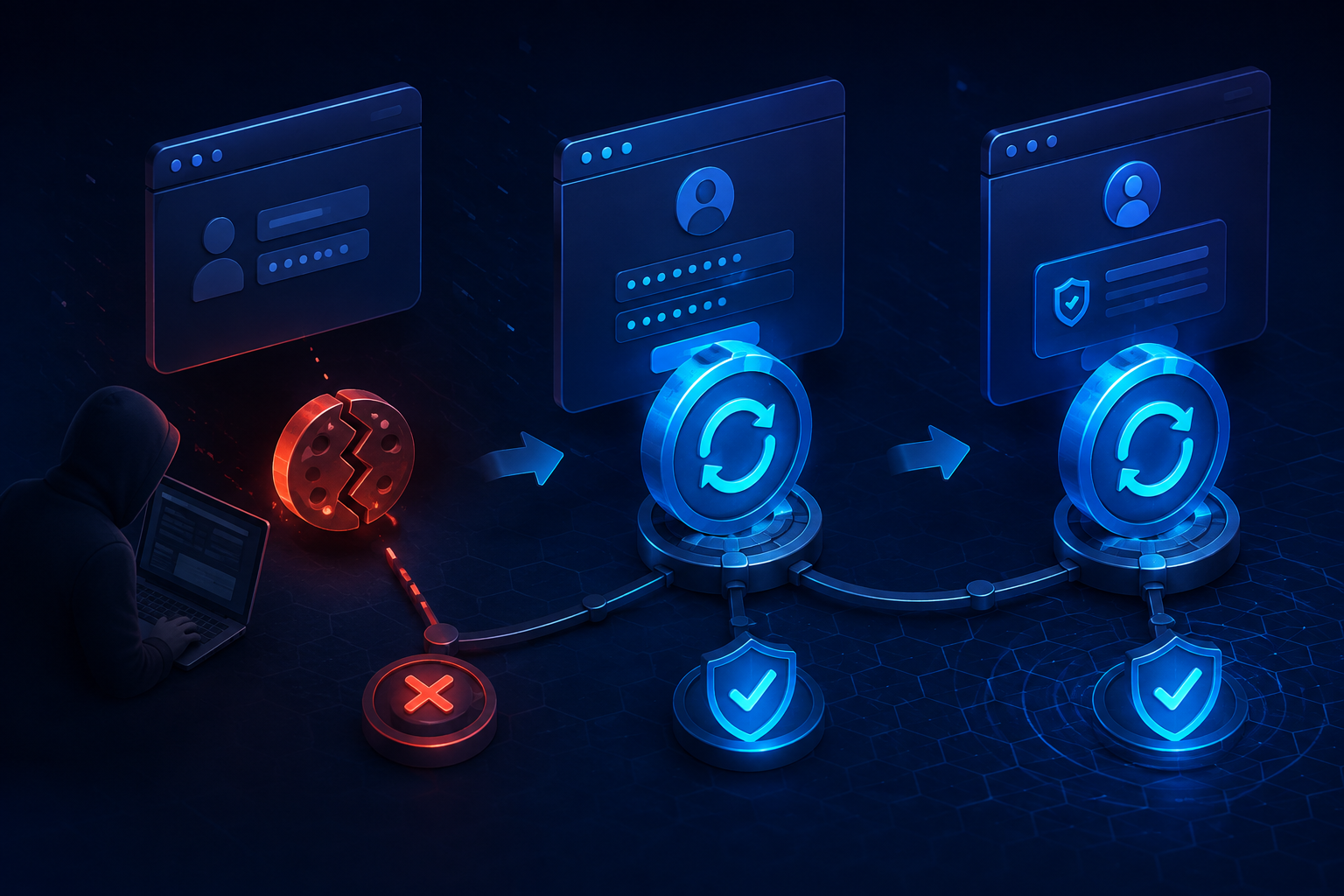
A practical operating guide for application teams maintaining password, SSO, or step-up authentication, with a bounded decision, difficult failure case, and reviewable evidence.
Published September 3, 2026
Review session-fixation defenses with an offshore developer
- Resolve when the application must replace a session identifier as trust changes.
- Collect pre-login and post-login cookie captures, synthetic accounts, privilege changes, and invalidation tests.
- Keep final approval with security owner.
Map every trust transition
This guide is for application teams maintaining password, SSO, or step-up authentication. The practical decision is when the application must replace a session identifier as trust changes. A Philippines-based offshore developer can investigate and implement a bounded slice, but security owner retains approval over production risk, protected data, and exceptions. Begin with a fixed revision, a synthetic fixture, an approved environment, and one observable outcome.
Map every trust transition matters specifically because the team must resolve when the application must replace a session identifier as trust changes. Use pre-login and post-login cookie captures, synthetic accounts, privilege changes, and invalidation tests to compare the intended behavior with the observed one. For the difficult case, test a session established before login remains valid after authentication. State what the evidence establishes, what it merely suggests, and what remains unknown. Prefer a small reversible change and a focused regression test over a broad rewrite. Recheck permissions, state transitions, cleanup, and the user-visible result after the change. The offshore developer should finish with a concrete recommendation; security owner makes the final risk decision.
Capture identifiers without exposing live secrets
Trace the full path through browser cookies, authentication service, session store, and authorization middleware. Mark where data enters, changes shape, crosses an ownership boundary, persists, retries, or becomes visible. Collect pre-login and post-login cookie captures, synthetic accounts, privilege changes, and invalidation tests. A successful happy path proves only that case, so record assumptions and unavailable dependencies beside the evidence.
Capture identifiers without exposing live secrets matters specifically because the team must resolve when the application must replace a session identifier as trust changes. Use pre-login and post-login cookie captures, synthetic accounts, privilege changes, and invalidation tests to compare the intended behavior with the observed one. For the difficult case, test a session established before login remains valid after authentication. State what the evidence establishes, what it merely suggests, and what remains unknown. Prefer a small reversible change and a focused regression test over a broad rewrite. Recheck permissions, state transitions, cleanup, and the user-visible result after the change. The offshore developer should finish with a concrete recommendation; security owner makes the final risk decision.
Rotate on authentication and privilege change
Build a compact test matrix with a normal case, a denied or invalid case, a repeated action, an interrupted action, and a recovery case. Record fixture identity, setup, expected result, observed result, revision, time reference, and cleanup. Do not copy customer records or production credentials into a general handoff.
Rotate on authentication and privilege change matters specifically because the team must resolve when the application must replace a session identifier as trust changes. Use pre-login and post-login cookie captures, synthetic accounts, privilege changes, and invalidation tests to compare the intended behavior with the observed one. For the difficult case, test a session established before login remains valid after authentication. State what the evidence establishes, what it merely suggests, and what remains unknown. Prefer a small reversible change and a focused regression test over a broad rewrite. Recheck permissions, state transitions, cleanup, and the user-visible result after the change. The offshore developer should finish with a concrete recommendation; security owner makes the final risk decision.
Invalidate the earlier session deterministically
The boundary case for this assignment is: a session established before login remains valid after authentication. Hold the nearest passing case constant and change one condition at a time. Capture the first divergence, its user or system consequence, and the evidence that distinguishes a code defect from an environmental limit.
Invalidate the earlier session deterministically matters specifically because the team must resolve when the application must replace a session identifier as trust changes. Use pre-login and post-login cookie captures, synthetic accounts, privilege changes, and invalidation tests to compare the intended behavior with the observed one. For the difficult case, test a session established before login remains valid after authentication. State what the evidence establishes, what it merely suggests, and what remains unknown. Prefer a small reversible change and a focused regression test over a broad rewrite. Recheck permissions, state transitions, cleanup, and the user-visible result after the change. The offshore developer should finish with a concrete recommendation; security owner makes the final risk decision.
Test concurrent tabs and logout boundaries
Keep implementation authority narrow. The developer may reproduce behavior, prepare a focused correction, add regression coverage, and explain tradeoffs. The internal owner decides product meaning, access expansion, architecture exceptions, irreversible data actions, public communication, and release acceptance. Escalate when the result crosses those boundaries.
Test concurrent tabs and logout boundaries matters specifically because the team must resolve when the application must replace a session identifier as trust changes. Use pre-login and post-login cookie captures, synthetic accounts, privilege changes, and invalidation tests to compare the intended behavior with the observed one. For the difficult case, test a session established before login remains valid after authentication. State what the evidence establishes, what it merely suggests, and what remains unknown. Prefer a small reversible change and a focused regression test over a broad rewrite. Recheck permissions, state transitions, cleanup, and the user-visible result after the change. The offshore developer should finish with a concrete recommendation; security owner makes the final risk decision.
Write evidence the security owner can reproduce
Close the working window with starting and ending revisions, changed paths, commands, fixtures, passed and skipped checks, screenshots or logs, known limitations, rollback notes, reviewer, and next authorized action. The next person should be able to repeat the check without guessing which environment or state produced it.
Write evidence the security owner can reproduce matters specifically because the team must resolve when the application must replace a session identifier as trust changes. Use pre-login and post-login cookie captures, synthetic accounts, privilege changes, and invalidation tests to compare the intended behavior with the observed one. For the difficult case, test a session established before login remains valid after authentication. State what the evidence establishes, what it merely suggests, and what remains unknown. Prefer a small reversible change and a focused regression test over a broad rewrite. Recheck permissions, state transitions, cleanup, and the user-visible result after the change. The offshore developer should finish with a concrete recommendation; security owner makes the final risk decision.
Review the result against the original decision
Return to the question: when the application must replace a session identifier as trust changes. Compare the normal, invalid, repeated, interrupted, and recovery cases. Confirm that the result holds across the relevant parts of browser cookies, authentication service, session store, and authorization middleware, and identify any consumer or environment that was not exercised. A green build is useful evidence, but it does not stand in for the runtime conditions that the test never reached.
A strong final note separates observation, inference, recommendation, and approval. It names the accepted behavior, rejected alternatives, residual risk, accountable reviewer, and condition that should reopen the work. This lets a distributed developer advance implementation and verification across working hours while the internal team keeps control of product and production decisions.
Questions about assessing Philippine developers
What can the offshore developer own?
The developer can reproduce the issue, implement the approved slice, add focused tests, and package evidence. Internal owners retain protected access, production acceptance, and residual risk.
What should the handoff contain?
Include pre-login and post-login cookie captures, synthetic accounts, privilege changes, and invalidation tests, the revisions and changed paths, passed and skipped checks, limitations, reviewer, and next authorized action.
Sources
International Labour Organization guidance on remote work arrangements reinforces why remote role briefs should document expectations, communication rhythms, and accountable handoffs.